
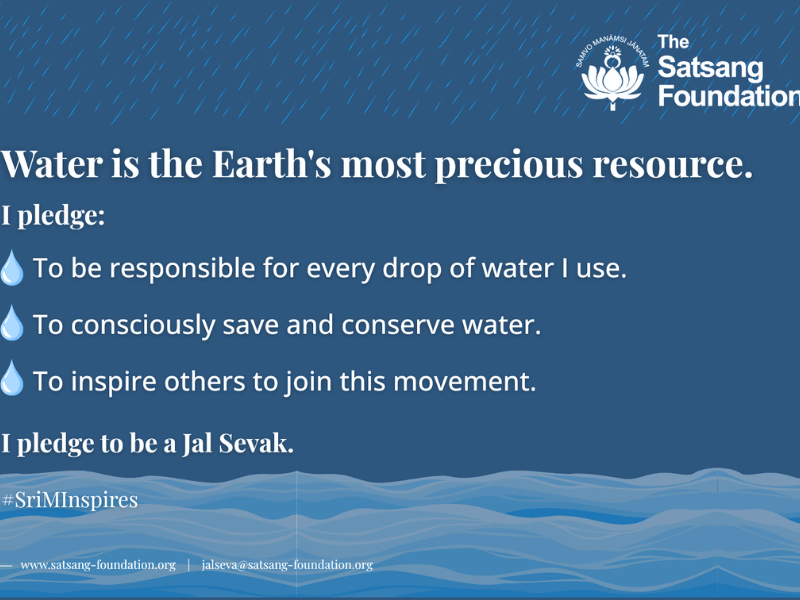
“Water is the essence of life. Great civilizations like Mohenjo-daro collapsed with the dwindling and later complete cessation of water. The great rivers that flow in India keep us alive but the ground water is running out fast. It is our sacred responsibility and duty to sustain water. Satsang Jal Seva Sangatan is an initiative to conserve the divine element of ‘Apas’ (water) so that the ‘Abhisheka’ (consecration) of living beings is sustained.”
— Sri M
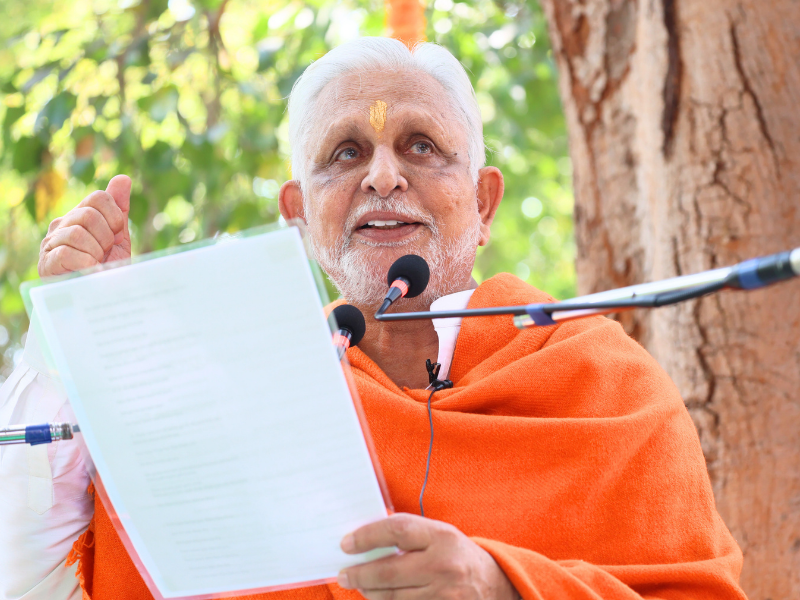
On the sacred night of Maha Shivaratri 2026 nearly 2,800 people – in person and online – took the Jal Seva Pledge, committing themselves to protect and conserve water as a sacred trust. In a world where taps and even rivers run dry, this act of collective intention is more than a promise; it is a spiritual reckoning.
On World Water Day, 22nd March, the Satsang Jal Seva Sangatan (SJSS) invites each one of us to deepen that reckoning, and to act on it.
A Pledge with Deep Roots
The Jal Seva Pledge was first formally conceived and administered in 2020, with the official launch of the Satsang Jal Seva Sangatan. From its inception, Sri M envisioned it as a spiritual commitment to recognising that water is not merely a resource to be managed but a divine gift, and a vulnerable common heritage to be protected now and for the future.

Since then, the Pledge has been taken at landmark moments and sacred sites across India: on World Water Day 2022, at the launch of the Aviral Godavari Mission at Trimbakeshwar in late 2022, at the Declaration of a Plastic-Free Kumbh in Nashik in 2023, at the launch of the Vaigai Rejuvenation Project in Madurai in 2024, and at the Mahakumbh Mela in Prayagraj in 2025. Each occasion has been a reminder that the act of conservation is inseparable from the act of devotion.
SJSS operates across three interlocking spheres — My World, My Community, and Me — reflecting the understanding that lasting change must move simultaneously from the global to the intimate. The numbers tell their own quiet story: over 65 million litres of water conservation capacity created since launch, with the rejuvenation of water bodies, building of check dams and of percolation wells, and rainwater harvesting. Yet for all the scale of this work, SJSS has never lost sight of the fact that water conservation begins at home, with each individual, in the small moments of every day.
From Pledge to Practice: The Jal Sevak’s Way
Taking the Jal Seva Pledge is only the beginning. It is a call to transform our daily habits, to become in the truest sense, Jal Sevaks: servants of water.
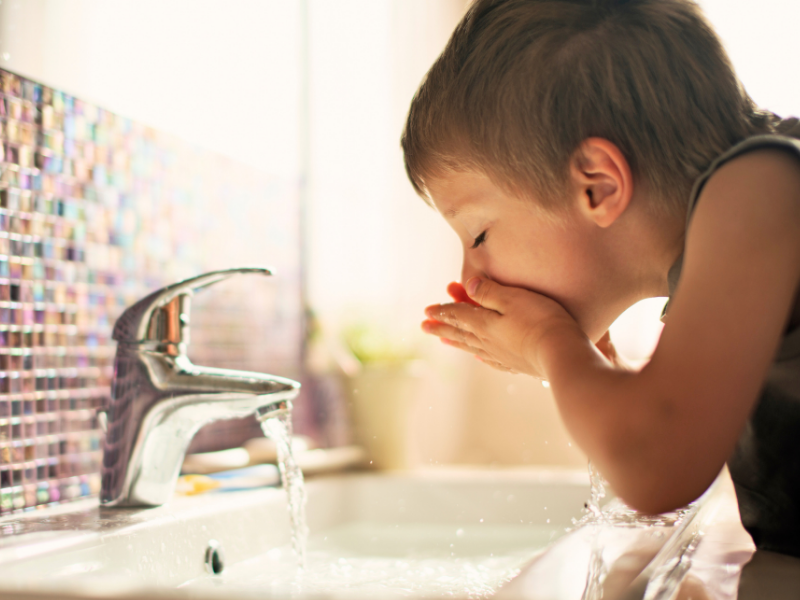

For children, who are water’s most important future stewards, early awareness builds lifelong respect. Simple practices matter: rinsing with a cup while brushing rather than letting the tap run, closing taps promptly, and learning to report dripping taps for repair. A child who grows up as a water-watchkeeper carries that consciousness into every role they will ever hold.
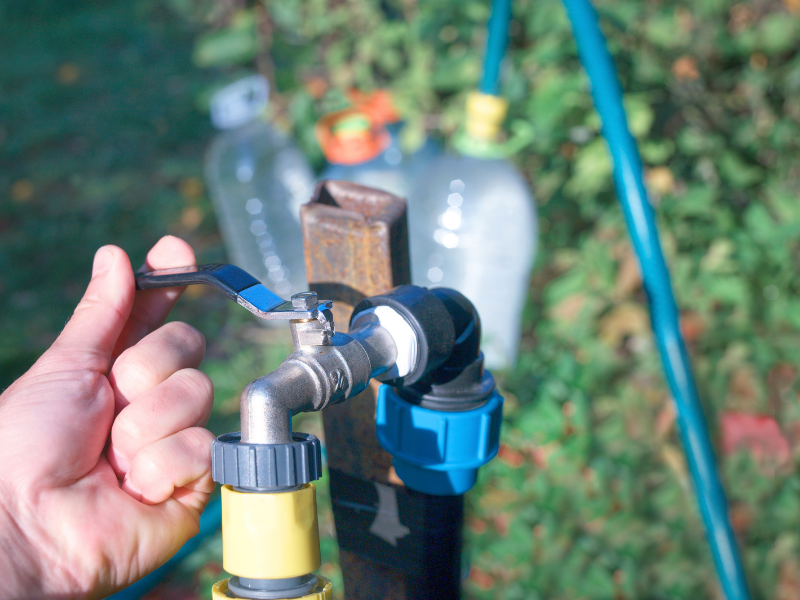
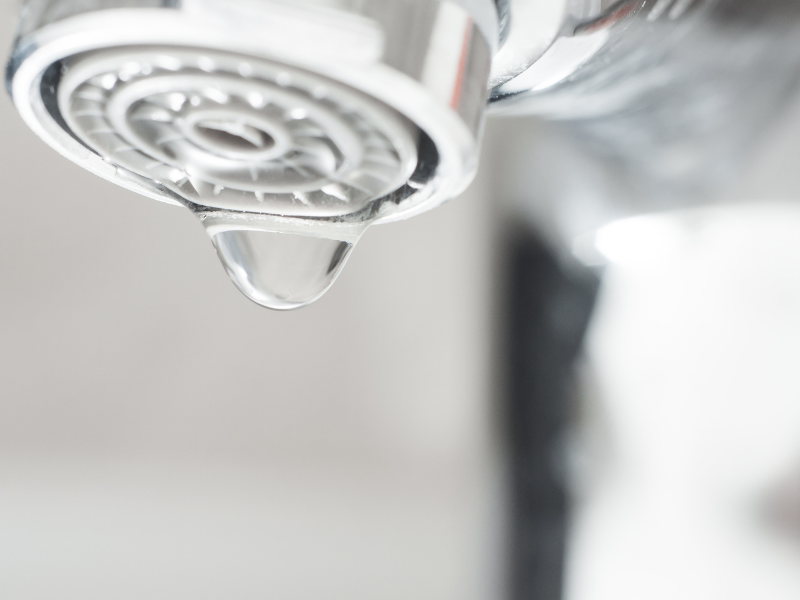
For adults, the commitment runs deeper into the infrastructure of everyday life. Avoiding unnecessary extraction of groundwater through borewells, repairing leaks without delay, not wasting running water on washing vehicles, driveways and balconies, and reconsidering the overuse of RO filters which waste significant quantities of water for every litre of drinking water, are choices that add up across millions of households. Even the reject water from RO systems can be repurposed for cleaning, mopping, or washing vehicles, reducing waste meaningfully. Small interventions carry outsized impact. Fitting aerators onto taps reduces water flow without reducing utility. Maintaining ball valves and preventing tank overflow ensures that not a single litre is lost to carelessness. These are the quiet, daily expressions of the Pledge one has taken.
Where Water Flows, Gender Equality Grows
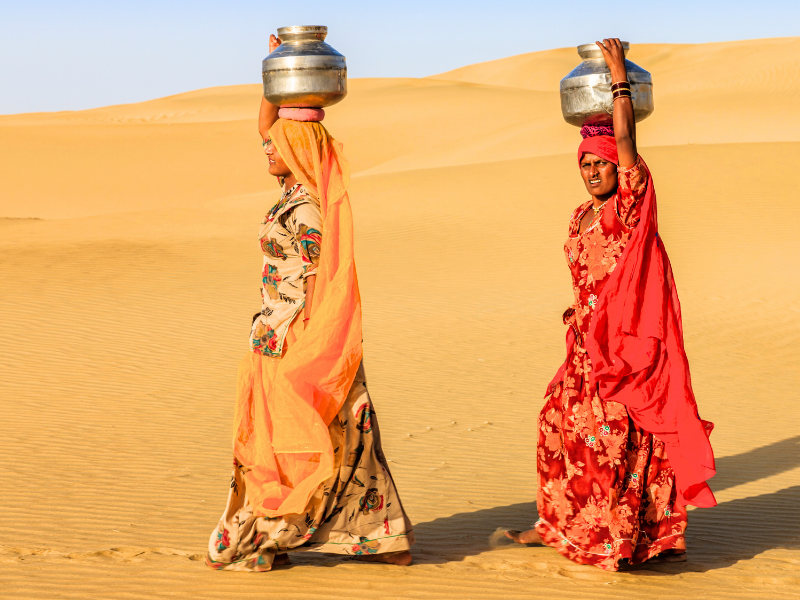
Every year on 22nd March, the world pauses to reflect on the state of its waters. This year, the United Nations has chosen the theme “Water and Gender”, with the rallying call: Where Water Flows, Equality Grows.
It is a recognition of a reality that countless communities in India know intimately: that the burden of water scarcity falls most heavily on women and girls, who collect it, carry it, manage it in the home, and care for those made sick by its absence. And yet, too often, women remain underrepresented in the decisions that determine how water is governed, protected and restored.
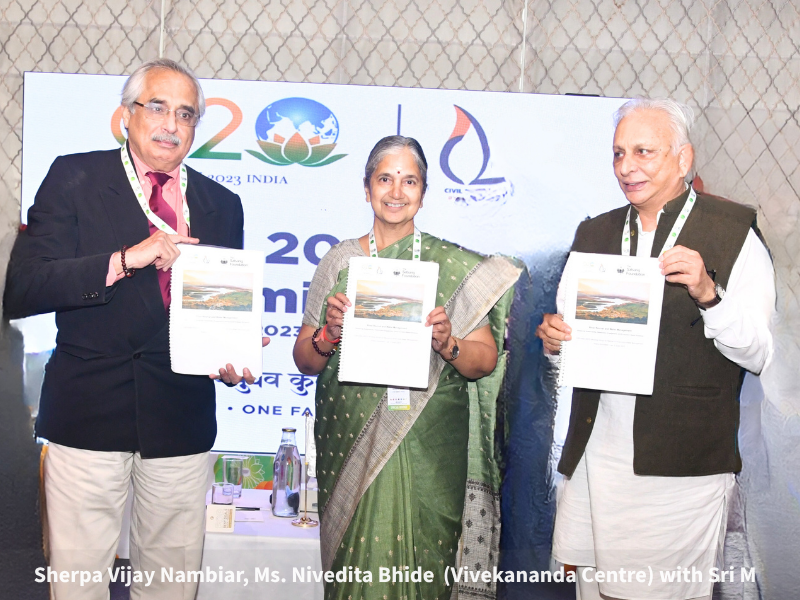
This truth was recognised deeply by the C20 Working Group on “Revival of Rivers and Water Management”, led by The Satsang Foundation under India’s G20 Presidency in 2023. Its policy document placed community participation at the very core, calling on states to build “ground-up, consensus-led solutions.” SJSS is built on the foundation that lasting change must be rooted in the lived knowledge of those who depend on water most directly. In India’s villages and towns, that knowledge has always lived with women.
For those who have taken the Jal Seva Pledge, World Water Day is a moment of reflection, a time to recommit, to share the Pledge with those who have not yet taken it, and to deepen the practices that give the Pledge its meaning. The invitation is both personal and collective.
If you have already taken the Pledge, let this be the occasion to ask:
What have I changed? What more can I do? Whose voices are being heard in how water is managed, revived and protected?
And if you have not yet taken the Pledge, there is no better moment than now.
Join Us. Be a Jal Sevak
The Satsang Jal Seva Sangatan’s mission is to make every Indian city self-sufficient in its water needs, to restore our rivers to their perennial glory, and to nurture in every heart the understanding that water is sacred.
None of this is possible without you.
To take the Jal Seva Pledge online, please click here
To support the Satsang Jal Seva Sangatan, please write to us at: connect@satsang-foundation.org
